

Your water bill is high, but you see no leak
A bill that jumps without a change in how you use water is one of the most common first signs. Water can be leaving through a line you never see. Learn what a high bill can mean.
Your water bill went up. Your meter keeps moving. Or there's a stain you can't explain. Something is leaking, but you can't see where.
Clearcrest Leak Detection is a residential and commercial leak detection company in Orange. We find hidden water leaks for homeowners, landlords and property managers. We pinpoint the leak first, so no one has to guess or tear open walls and floors to look for it.
Tell us what you're noticing. We'll explain what the inspection involves before you book.
What happens when you call
Leak detection is a test that finds where water is escaping from your plumbing when you can't see it. A technician checks your water meter, tests pipe pressure, and then uses tools like acoustic listening and thermal imaging to narrow it down to the spot. You get the location before anyone cuts into a wall, floor or yard.
Leaks we find in Orange homes and buildings:
What we do
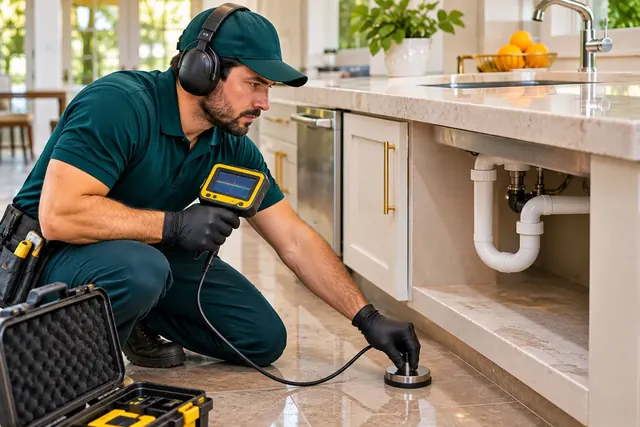
Warm floors or water running under concrete
Learn more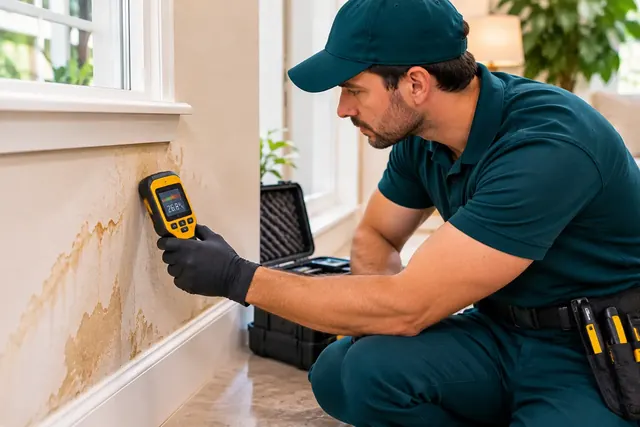
Stains and damp spots in walls and ceilings
Learn more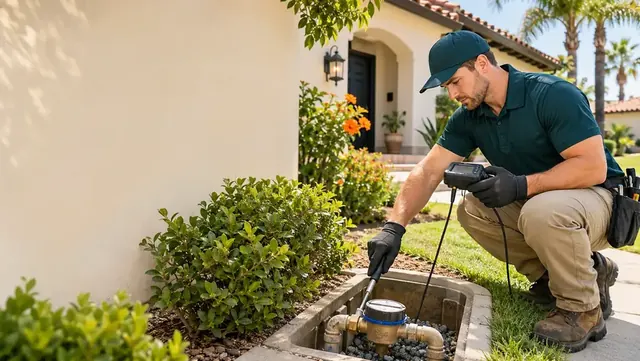
High bills, a moving meter, wet yard spots
Learn more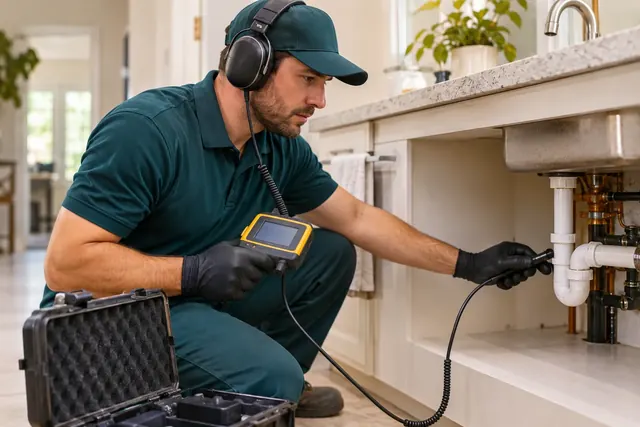
Pinhole leaks and leaking supply pipes
Learn more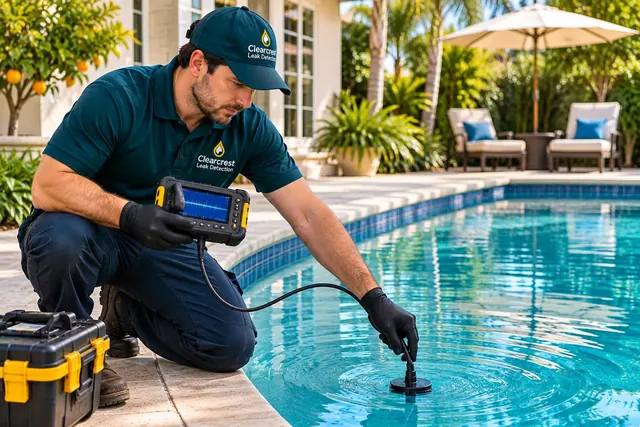
Pools and spas losing water
Learn more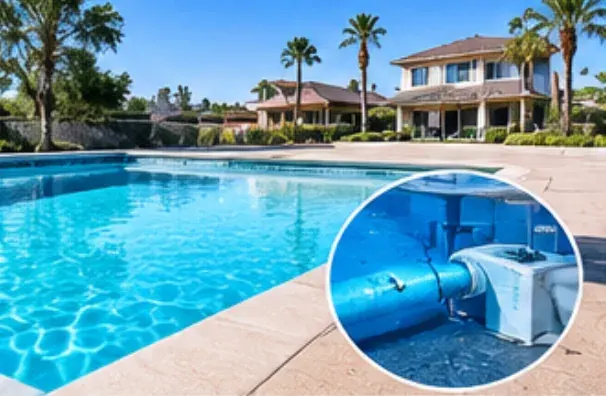
Fixing the pool leak once it is found
Learn more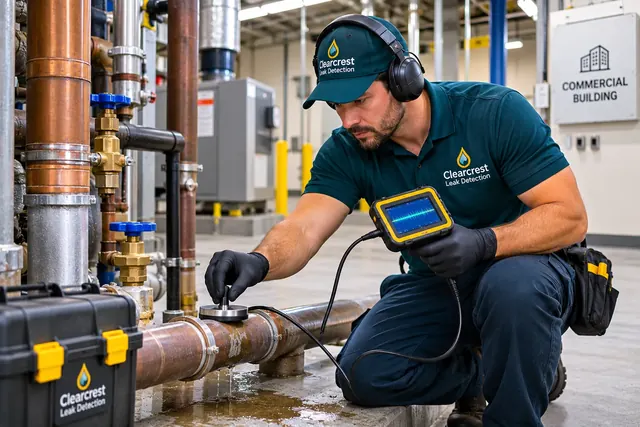
Apartments, condos and business buildings
Learn more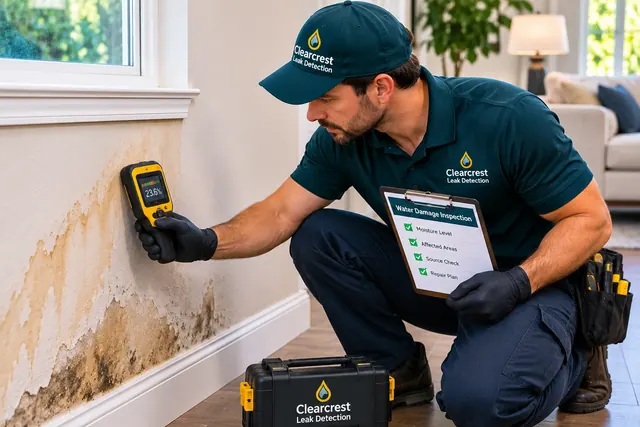
Active leaks, day or night
Learn more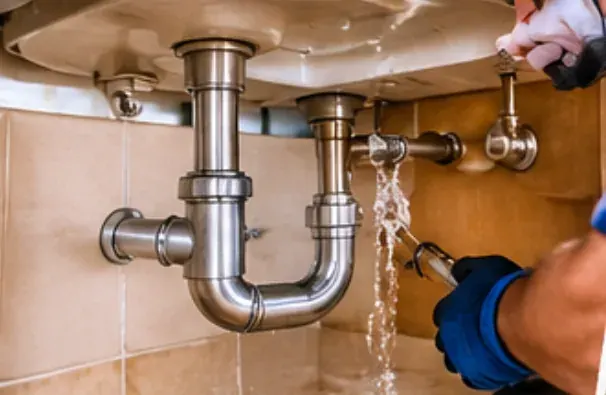
Pipe, slab and water line repairs
Learn moreMany people think finding a leak means opening walls until you see water. That is slow, messy and often wrong. Water travels. It can run along a pipe or a beam and show up feet away from the real leak.
A leak detection specialist works the other way around. First we prove there is a leak. Then we narrow down which line it is on. Then we find the spot. Only then does anyone talk about opening a wall or floor.
Each step answers a different question:
Our team is professional and experienced in this kind of testing. We follow a transparent service process: you see what we test, you hear what we find, and you get a clear explanation in plain words.
Want to know how a specialist differs from a general plumber? Read more about us.
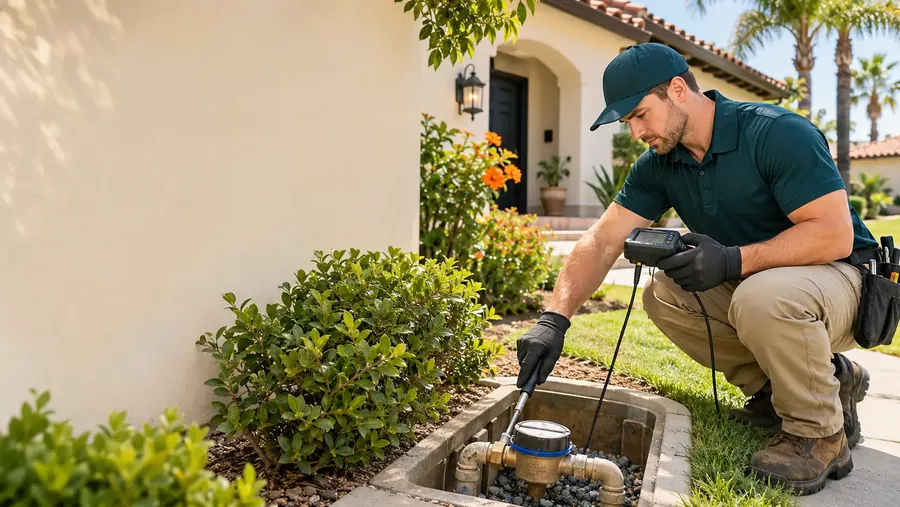
How every visit works
Warning signs
Most hidden leaks give clues before you ever see water. One clue alone doesn't prove a leak. Two or more together are a good reason to get it checked.
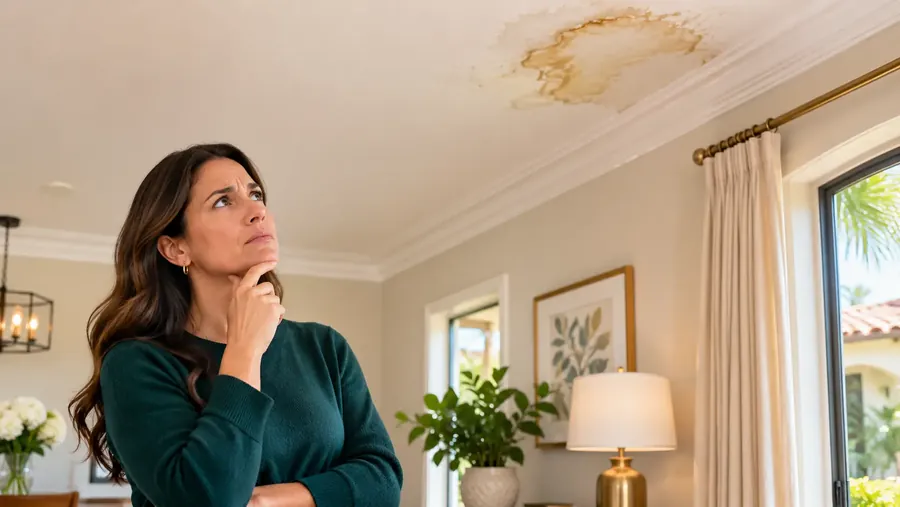
A bill that jumps without a change in how you use water is one of the most common first signs. Water can be leaving through a line you never see. Learn what a high bill can mean.
Turn off every tap, the washer and the sprinklers. If the meter's small leak dial still turns, water is going somewhere. This is one of the simplest checks you can do yourself.
A hiss or a trickle inside a wall, under a floor, or behind a toilet often means a pressurized pipe is leaking. Sound is one of the best clues a technician uses too.
If one patch of tile or concrete feels warm, a hot water pipe under the slab may be leaking. Read about slab leaks.
Brown rings on a ceiling, paint that bubbles, soft drywall, or a damp smell that won't go away can point to water inside the wall or ceiling. See signs of leaks in walls and ceilings.
A spot that stays soggy or greener than the rest of the lawn, even in dry weather, can mean the water line under the yard is leaking.
Weaker flow at more than one faucet can mean water is escaping before it reaches you. It can also be a pressure regulator or a clog, which is why testing matters.
Noticed two or more of these? Call (714) 439-5275. The sooner the source is found, the less water you pay for and the less time it has to soak into your home.
Is water coming through the ceiling or spreading across the floor right now? Turn off your main water valve, then see what to do in a water leak emergency.
Common causes
Leaks rarely start for one reason. Usually age, pressure and movement work together over time.
Orange has two big housing eras. Many homes in Old Towne were built before 1920, and large neighborhoods across the city were built in the 1950s to early 1970s. Pipes in homes of that age may be nearing the end of their life, especially if they have never been replaced.
Copper can wear thin from the inside over many years. A tiny hole can form and spray or drip inside a wall or under a slab. Learn about pipe and pinhole leaks.
When household pressure runs too high, every joint, valve and fitting is under extra stress. Over time, that stress can open small leaks.
Pipes under a slab or in the ground can rub against concrete, rocks or soil as the ground shifts slightly. Rubbing wears a weak spot into the pipe wall.
Joints at elbows, valves and supply lines can loosen or wear out. These leaks often start small and hide inside walls or cabinets.
Our process
Every home is different, so we pick the steps that fit your problem. A typical visit looks like this:

Where is the stain? When did the bill go up? Does the floor feel warm? Your answers tell us where to start.
We check the water meter with all fixtures off. If needed, we pressure test the plumbing to see if a line is losing water.
By testing lines one at a time, we find out if the leak is on the hot water side, the cold water side, or the line coming in from the street.
We use the tools that fit the job, such as acoustic listening for sound, thermal imaging for heat, or a moisture meter for wet materials. Not every tool is needed on every visit.
We show you where the leak is and what we think caused it. You get a clear explanation of your options before any work starts.
If you want, we can also take care of the repair. The choice is yours.
Ready to find out where the water is going? Call (714) 439-5275 or request a leak inspection.
Equipment
Modern leak detection uses non-invasive tools. They pick up the sound of escaping water, temperature changes on a surface and moisture in building materials. Here is what each one does.
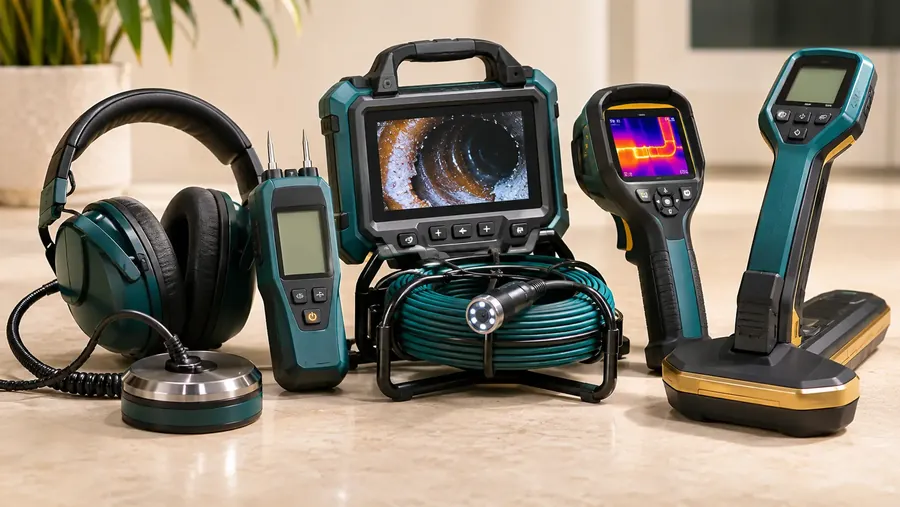
Water escaping a pressurized pipe makes a sound. These devices amplify that sound so a technician can follow it to the loudest point, even through concrete or soil.
A thermal (infrared) camera shows temperature differences. A leaking hot water line shows up as a warm area. Wet drywall often shows up cooler than dry drywall.
A moisture meter reads how wet drywall, wood or flooring is. It helps map how far water has spread and where it is strongest.
A gauge on an isolated line shows if the line holds pressure. If pressure drops, that line is leaking.
For very small or hard-to-reach leaks, a safe gas can be put into a drained line. A sensor picks up the gas where it escapes.
A locator traces where a buried pipe runs, so the search stays on the right path across a yard or under a floor.
A small camera can look inside tight spaces, like a wall cavity through a small opening, to confirm what the other tools found.
Knowing the exact spot first changes how the whole problem goes.

Before you open a wall, call us first: (714) 439-5275.
Why choose us
Orange has a real mix of homes, from older houses in Old Towne to the 1950s to 1970s tract homes found across the city. Different homes leak in different ways, so we match the test to your home instead of using one method for everything.
More than 4 in 10 homes in Orange are rented (U.S. Census). When a tenant reports a stain or a high bill, we find the source so you can decide what to fix and who to call.
Leaks don't wait for business hours, and neither do we.
We explain each test as we go. No mystery, no guesswork.
You know what we will do and what it covers before work begins.
We stand behind our work. See our service terms for details.
Our commitments
These are the commitments we make on every job:

From single-family homes to apartments, condos and business buildings, we find the leak and explain it in plain words.
Professional leak detection is very good at narrowing a leak to a small area. Accuracy depends on the pipe type, depth, noise around the home, and the size of the leak. Using more than one method, like sound plus thermal imaging, helps confirm the spot.
Turn off all water in the house and watch your water meter for a few minutes. If the leak dial moves, water is leaving somewhere. Other clues are a higher bill, the sound of running water, stains, or a warm spot on the floor.
In most cases, yes. The tools find the leak from the outside of the wall, floor or ground. Some opening may still be needed to reach and repair the pipe, but knowing the spot first keeps that opening small.
It depends on the type of leak, how many lines need testing, how easy they are to reach, and the size of the property. A single wall leak is a different job than a long line under a yard. Call us, describe what you are seeing, and we will explain what the inspection involves before you book.
Sometimes. Many homeowner policies look at the cause of the leak and the damage it caused, and some cover the cost to find the leak. Every policy is different, so check yours or call your insurer. A clear record of where the leak is can help with your claim.
Tell us what you've noticed and where: a stain, a sound, a warm spot, a wet patch outside, or a jump in your water bill. If you can, check whether your water meter moves with all water off. These details help us plan the right tests.
Yes. You can call us 24 hours a day, 7 days a week at (714) 439-5275.
It depends on the home and the leak. A simple leak with clear signs can be found faster than a leak under a slab or a long buried line. We will give you a better idea once we hear what you are noticing.
Yes. Multi-unit buildings and commercial properties need a different approach, like finding which unit a leak is coming from. See commercial leak detection.
Yes. We serve the whole city, including Old Towne and East Orange, plus the nearby neighborhoods of El Modena, Olive and Orange Park Acres. We also serve nearby cities. See all service areas.
Service area
We cover all of Orange, from Old Towne and the streets around Plaza Park to El Modena, Olive, Orange Park Acres and East Orange.
Nearby, we also serve:
Anaheim · Santa Ana · Tustin · Garden Grove · Villa Park · All service areas
Every day a hidden leak runs, you pay for water you never use, and it keeps soaking into your home. You don't have to guess where it's going.
Call us, tell us what you're seeing, and we'll find the source and explain your options in plain words.
Answered 24/7 · Licensed, insured and certified · 100% Satisfaction Guarantee
